
Taking Note II*
Anchoring

When Naomi Richards, Amy Shea and I thought about what we wanted the DeathWrites Network to be and to do, it was simple: be a resource for writers of all styles, from all areas and disciplines, writing about dying, death and grief. We would bring writers together to form a kind and generous community where discussing death and dying and grief was the norm and we’d support each other to make our best work.
As part of a project within this project, back in 2022, we decided to focus on diaries because keeping a journal is a way to integrate the practice of writing with the practice of remembering, as well as the practice of navigating and making sense of times full of illness, death and loss. Families are often global and there was such precarity in those days (as there still is now).
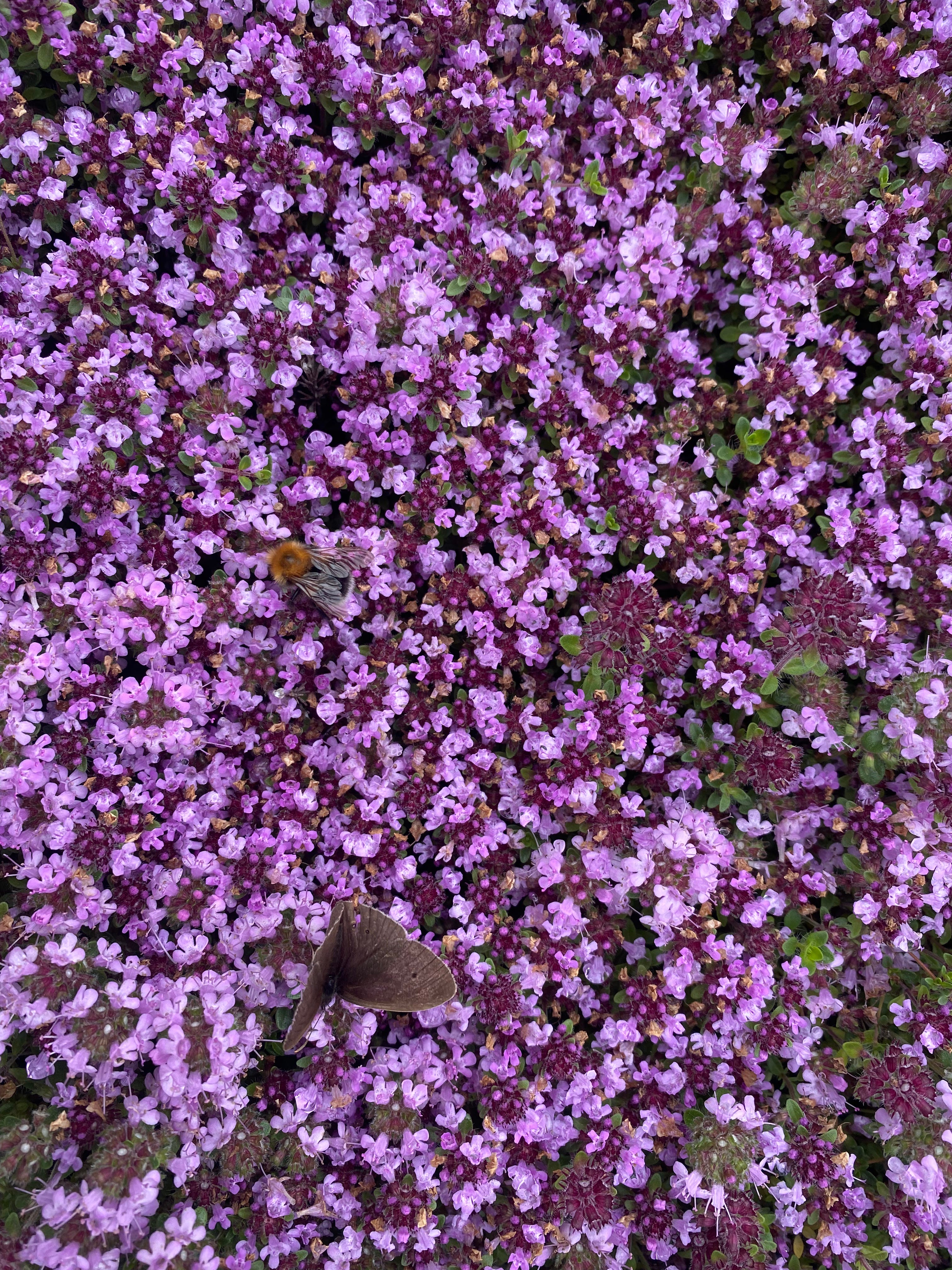
Recording is a way of anchoring ourselves. It can take many forms: a diary; photos, or recording voice notes (or sending voice messages to close family/friends); seeking out and learning from (and sharing) pertinent articles and resources; taking a daily walk and noting a few things you see; it can be the raw emotions set onto the page, which you then destroy. Noting things down with immediacy, taking a photo as a record, and creating systems, charts and forms that we can come back to, either the next day (what was that nurse’s name) or a few years later (what month did that hospitalisation occur?). It is a way to remember and gives us ‘data’ and narrative to reflect on.
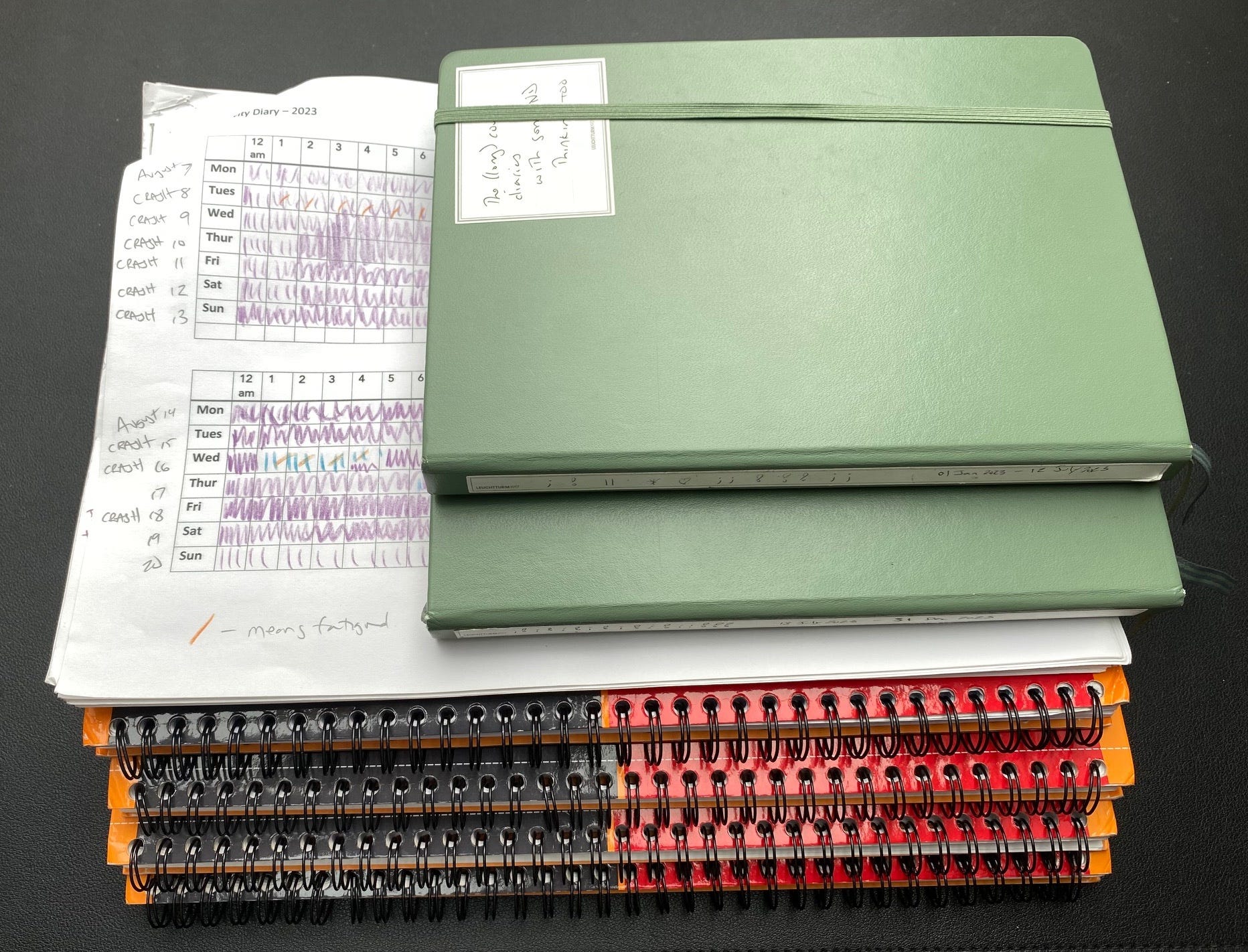
In early 2023 I got Covid that transmorphed into Long Covid, which is still disrupting everything. I’ve always kept a diary but then it took on a different significance when an occupational health doctor suggested recording my symptoms to figure out what causes crashes. I took notes and read a lot into Long Covid and fatigue and chronic illness and learned about the importance of rest, types of rest and energy and compassion. I looked at energy activity charts and eventually crafted a form of my own liking, which I’ve modified over the interceding months. I use a voice to text too, so I am literally recordings my records.
My A4 diaries, although daily, were messy and inconsistent, varying wildly in what I recorded. So, a few months in, in an act of trying to exercise my brain and to titrate up the amount of time I could sit in a chair, I transcribed my A4 notebooks into A5 journals. I have an internal coded system using different punctuation ( • * ; ! | / ) and midway through the year I started keeping track of my energy outputs and my fatigue levels as I try to understand what leads to the severe fatigue that presses me into the earth so brutally. (I am editing this in snatched clear minutes within a /// 7 crash).
Long Covid has an uneven recovery profile and so you’re living with a day to day uncertainty of what your body will offer you; it shares some of the uncertainty of navigating terminal illness with someone you love which is impossible to predict, can be even more uneven, and offers up different and higher stakes.
It takes stamina to keep going with all types of uncertainty, when stress or crisis or overwhelm or fatigue strip energy from you. There is a slow time (chronic time; ‘spiral time’ (@divergent_design_studios); end times) to keeping records and there is then an energy-demanding commitment needed do something with them.
This is what being in the company of other writers supports: both the slow time (and quick jolts forward) and the commitment. Life is messy and sustaining ongoing – even if uneven and spiky – reverberations is a strength. You can’t magic up this work, this processing, this wild connecting of threads, the creating of new forms, or the crafting of beautiful and impactful work, without building time and the practices that support freedom and imagination and an understanding of the vagaries of living.
And so I’m building a slow-time practice (which includes solitude as well as different connections with many writers and makers and gardeners and ecologists and walkers and knitters) that encourages the gathering of notes and of writers, and one that understands what we don’t have the words for, what is too hard to note down but is remembered in a body and that there will be times we’re too busy to attend to this work; we honour this creative process that is an active, attentive thing itself.
We don’t necessarily need to know what these notes will become (and they may remain private markers), but as a writer and maker, the act of recording, the act of keeping a diary, of collecting scraps of papers, and screenshots, is a way of making a gift to your future self, the writer you are.
*this post is a version of a piece published in the DeathWrites one-off paper.